Mesh vs Fabric Office Chair: Which Is Better for Hot Weather?
Mesh or fabric office chair in a warm climate? Compare breathability, comfort, durability, and real-world performance to choose the best option.
Table of contents
If you work from home in a warm climate, your office chair can make or break your comfort. The difference between mesh and fabric isn’t just about style — it’s about airflow, heat retention, and how your body feels after 6–8 hours of sitting.
Most people assume fabric is “good enough.” But in temperatures above 25°C, that assumption quickly turns into discomfort: a warm back, trapped moisture, and constant repositioning.
So which one actually performs better in hot weather? Let’s break it down.
The core difference: airflow vs heat retention
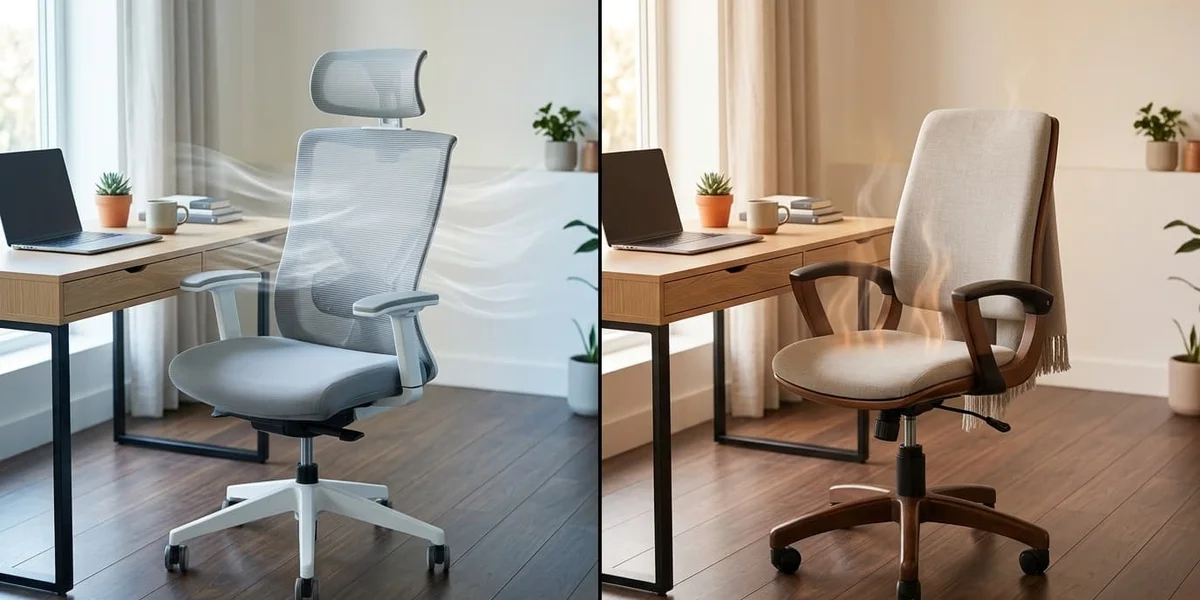
A mesh chair is designed with open-weave material that allows air to pass through continuously. Heat and moisture from your body dissipate instead of building up.
A fabric chair, even breathable fabric, sits on top of foam padding. That foam absorbs and retains heat over time. At first it feels comfortable — but after 1–2 hours, it becomes noticeably warmer.
This is the fundamental tradeoff:
- Mesh → airflow and temperature control
- Fabric → cushioning and initial comfort
Head-to-head comparison
Breathability
Mesh wins — by a wide margin.
Mesh allows constant airflow between your body and the chair. Even without air conditioning, it significantly reduces sweat buildup.
Fabric restricts airflow because of the foam layer underneath. Once heat builds up, it stays there.
Verdict: Mesh ✓
Comfort (short vs long sessions)
Fabric feels better at first — mesh feels better over time.
Fabric chairs are softer due to foam cushioning. For short sessions (1–2 hours), they can feel more comfortable.
But in longer sessions, especially in warm environments, that same foam becomes a heat trap. Mesh may feel firmer initially, but it maintains consistent comfort over time.
Verdict: Fabric (short sessions), Mesh (long sessions)
Temperature control
This is where most people underestimate the difference.
In a room at 28–30°C:
- Mesh → maintains relatively stable comfort
- Fabric → progressively feels hotter
The longer you sit, the bigger the gap becomes.
Verdict: Mesh ✓
Durability
Both materials vary widely depending on quality.
- High-quality mesh can last 8–12 years without sagging
- Low-quality mesh can lose tension in 2–3 years
- Fabric chairs depend heavily on foam quality — cheap foam compresses and loses shape quickly
In humid climates, fabric also tends to retain moisture and odors over time.
Verdict: Slight edge to mesh (quality-dependent)
Maintenance
Mesh is easier to clean and maintain in warm climates.
- Mesh → wipe clean, doesn’t trap odors easily
- Fabric → absorbs sweat, dust, and requires deeper cleaning
Verdict: Mesh ✓
Real-world scenario: what actually happens after 4 hours
Let’s make this practical.
After 4 hours of work in a warm room:
-
Mesh chair:
- airflow still consistent
- minimal sweat buildup
- posture remains stable
-
Fabric chair:
- noticeable heat buildup
- damp feeling on back/seat
- more shifting and discomfort
This is why many people switch to mesh after trying fabric in warm climates.
Our recommendations
Ergonomic Mesh Office Chair with Adjustable Lumbar
Full mesh back and seat for maximum airflow. Ideal for hot climates where temperature control matters more than cushioning. Adjustable lumbar support and breathable design make it a top choice for long work sessions.
- Full mesh back AND seat
- Excellent airflow for hot climates
- Adjustable lumbar support
- Consistent comfort over long sessions
- Feels firmer than fabric chairs
- Assembly required
- Budget models may lose tension over time
Fabric Ergonomic Office Chair with Foam Cushion
A solid fabric option for cooler environments or shorter work sessions. Comfortable cushioning and breathable fabric, but not ideal for high-temperature rooms without proper cooling.
- Soft and comfortable initially
- More forgiving seat cushion
- Lower entry price
- Retains heat over time
- Less breathable than mesh
- Foam may degrade faster
When fabric still makes sense
Fabric chairs are not a bad choice in every situation.
They can work well if:
- Your office stays below 24°C (air-conditioned)
- You work in shorter sessions (2–4 hours)
- You prioritize softness over airflow
In those cases, the comfort advantage of fabric can outweigh the heat retention.
When mesh is the clear winner
Choose mesh if:
- Your workspace regularly exceeds 25°C
- You work 6+ hours per day
- You experience back sweating or discomfort
- You don’t have consistent air conditioning
For most remote workers in warm climates, mesh is not just better — it’s necessary.
The verdict
For hot weather, mesh is the clear winner.
The difference in breathability and long-term comfort is significant enough to impact focus, posture, and productivity. Fabric may feel better at first, but over time — especially in warm environments — mesh consistently performs better.
If you’re unsure, default to mesh. It’s the safer choice for most real-world home office setups.
Related articles
- Best mesh office chairs for hot weather — top picks by budget and features
- Home office cooling solutions that actually work — reduce overall room temperature for better comfort
Upgrade your home office setup
Explore our curated guides for staying cool and comfortable while working from home.
Prices are approximate and subject to change. Last verified April 2026.